Publications

Recent Scientific Publications and Research Contributions

This section presents Dr. Miranda’s most recent scientific publications, focusing on clinical research, therapeutic advances, and evidence-based developments in cardiology. These works reflect ongoing research activity and meaningful contributions to the diagnosis, treatment, and prevention of cardiovascular disease.

captura de pantalla 2026 03 19 a las 12.05.42

Ruperti-Repilado; Baumgartner; Bouma; Bouchardy; Budts; Campens; Chessa; del Cerro Marin; Gabriel; Gallego; Gonzalez; Jensen; Ladouceur; Lockhart; Miranda Barrio; Morissens; Moreno Escobar; Pasquet; Rueda Soriano; van den Bosch; van der Zwaan; Tobler; Greutmann; Schwerzmann. The coronavirus disease pandemic among adult congenital heart disease patients and the lessons learnt – results of a prospective multicenter european registry. International Journal of Cardiology, Congenital Heart Disease. 11, Elsevier, 21/11/2022.

read publication

cover1

At the beginning of the COVID-19 pandemic, professionals in charge of particularly vulnerable populations, such as adult congenital heart disease (ACHD) patients, were confronted with difficult decision-making. We aimed to assess changes in risk stratification and outcomes of ACHD patients suffering from COVID-19 between March 2020 and April 2021.

read publication

cover2

We aimed to find the parameters that optimize the diagnostic accuracy of pulse palpation to detect AF. We also aimed to create a simple algorithm for selecting which individuals would benefit from pulse palpation and, if positive, receive an ECG to detect AF.

read publication

cover3

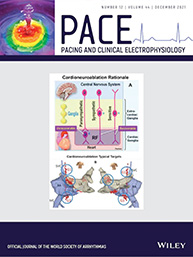
Right ventricular (RV) resynchronization therapy (CRT) with stimulation electrode implantation in the latest activation area guided by a high-density electroanatomic activation map was successfully performed in a patient with repaired tetralogy of Fallot (rToF), severe pulmonary regurgitation (PR), and severe dysfunction and dilatation of the right ventricle. An improvement in his clinical condition and intraventricular synchrony was achieved. There is a mechanical-electrical interaction in the right ventricle of patients with rToF; therefore, RV CRT in selected cases may be beneficial. Electroanatomic activation mapping can help achieve maximum clinical benefit by identifying the optimal stimulation site.

read publication